

An index fund is a type of investment fund that tracks a market index like the S&P 500. Instead of picking individual stocks, it automatically invests in all companies within that index.
These funds aim to match market performance, not beat it.
If you are just starting, index funds are almost always the best choice.
In fact, most active fund managers fail to beat index funds over time.
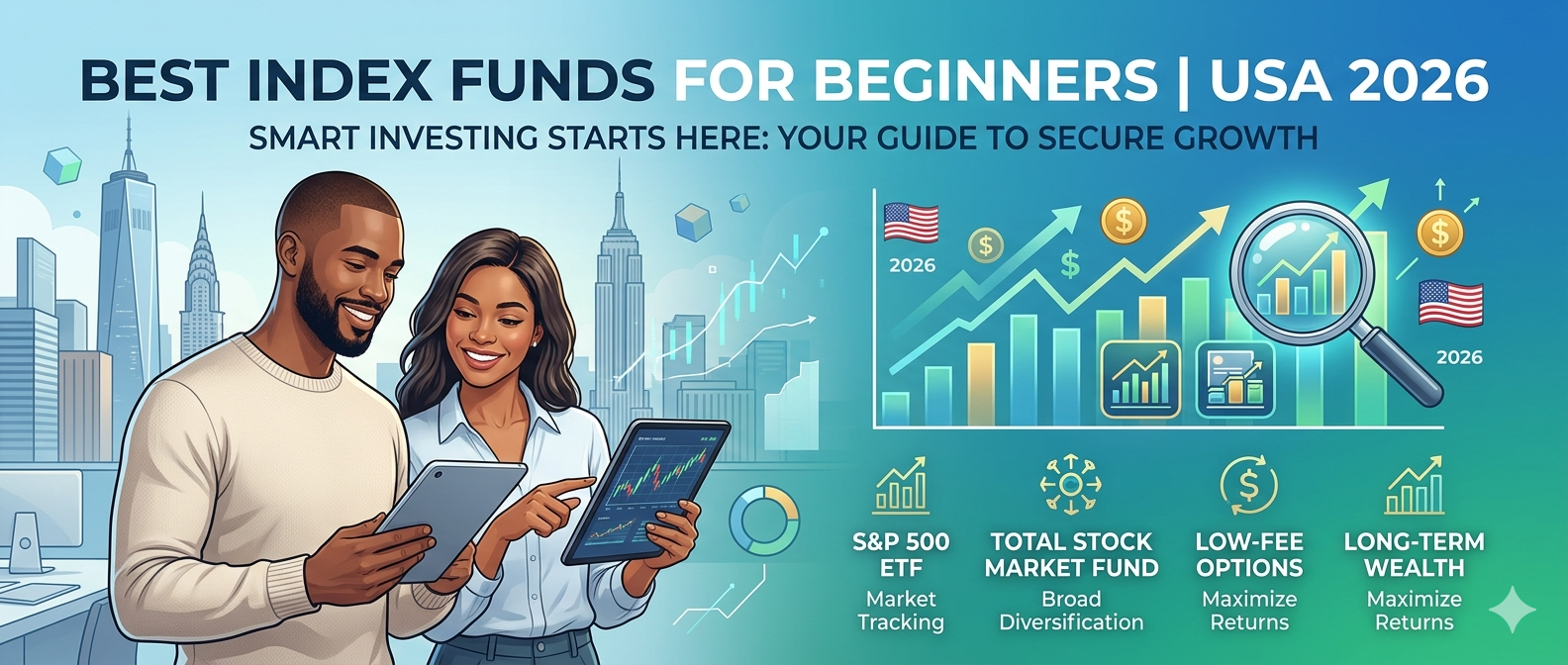
Here are the top 10 best index funds for beginners USA 2026 based on cost, performance, and ease of investing.
👉 Best for: All-in-one beginners
👉 Best for: Low-cost investing
If you want simple investing, stick to S&P 500 funds.
👉 Lower fees = higher long-term returns.
| Fund Name | Type | Avg Return (10Y) | Expense Ratio |
|---|---|---|---|
| VTSAX / VTI | Total Market | ~11.2% | 0.03% |
| VFIAX / VOO | S&P 500 | ~11.8% | 0.03% |
| FXAIX | S&P 500 | ~11–12% | 0.015% |
| FNILX | Large Cap | ~13% | 0% |
| SWPPX | S&P 500 | ~11–12% | 0.02% |
Even a small fee difference can cost thousands over time.
Best US platforms:
👉 Beginners should start with:
Simplicity wins in investing.
1. What is the best index fund for beginners in 2026?
The best index fund for beginners USA 2026 is usually VTI or VOO because they offer low fees and broad diversification.
2. Are index funds safe for beginners?
Yes, they are considered one of the safest long-term investments due to diversification.
3. How much money do I need to start?
You can start with as little as $1 using ETFs.
4. Which is better: ETF or mutual fund?
ETFs are more flexible, while mutual funds are easier for automatic investing.
5. What returns can I expect?
Historically, index funds return around 8–10% annually.
6. Is S&P 500 enough for beginners?
Yes, many investors build wealth using only one S&P 500 fund.
7. Do index funds pay dividends?
Yes, most index funds distribute dividends quarterly.
8. Can I lose money in index funds?
Yes, in the short term. But long-term risk is lower.
9. Are index funds better than stocks?
For beginners, yes—because they reduce risk.
10. How often should I invest?
Monthly investing is the best strategy.
 Apr 29, 2026
 Apr 29, 2026
 Apr 27, 2026
 Apr 27, 2026
 Apr 26, 2026
 Apr 25, 2026
 Apr 24, 2026
 Apr 23, 2026
 Apr 22, 2026
 Apr 21, 2026
 Apr 21, 2026
 Apr 20, 2026
 Apr 20, 2026
 Apr 18, 2026
 Apr 16, 2026
 Apr 14, 2026
 Apr 14, 2026
 Apr 13, 2026
 Apr 13, 2026
 Apr 13, 2026
 Apr 12, 2026
 Apr 12, 2026
 Apr 11, 2026
 Apr 11, 2026

Copyright © 2024-2026 Koti Takar Kotha(কোটি টাকার কথা). All Rights Reserved.
 IPO GMP

Author: Priya Paul Roy
Priya Paul Roy, একজন Finance Educator, SEO Strategist ও Stock Market Researcher। গত কয়েক বছর ধরে তিনি Mutual Fund, SIP, IPO ও Personal Finance নিয়ে কাজ করছেন এবং সাধারণ মানুষকে সহজ বাংলায় investment শেখানোর লক্ষ্য নিয়ে “কোটি টাকার কথা” প্ল্যাটফর্মটি তৈরি করেছেন। তিনি data-based analysis ও practical experience থেকে লেখা প্রকাশ করেন।